

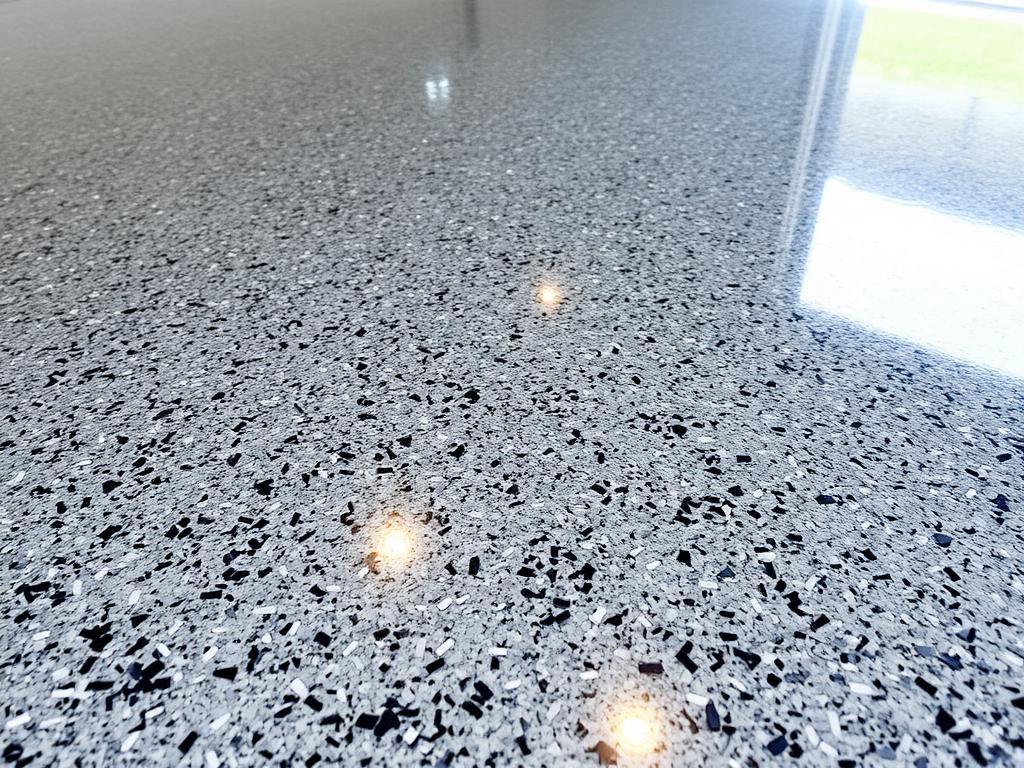
How a full flake system is built
A full flake floor is three layers. First, a pigmented base coat is applied to the freshly profiled slab. While it is still wet, colored vinyl flakes are broadcast by hand to refusal — meaning until the surface will not accept any more. Once cured, the loose flake is scraped and vacuumed off, and one or more clear topcoats lock everything in.
Broadcasting to refusal is what separates a full flake floor from a partial broadcast. It produces a consistent, seamless appearance with no visible base color showing through and a subtle texture underfoot.
Why flake works so well in Connecticut homes
The flake layer hides minor slab imperfections, patched cracks and trowel marks that a solid color would highlight. The texture it creates also improves traction when the floor is wet with snowmelt — a real consideration in a garage from November through March.
It is also forgiving over time. Small scuffs disappear into the pattern instead of standing out the way they would on a single-color floor.
- Camouflages slab imperfections and repairs
- Added slip resistance when wet
- Seamless and easy to clean — no grout lines
- Dozens of flake blends and custom color mixes
Choosing your flake blend
Flake blends are selected by color mix and flake size. Larger flakes read as a bolder, more granite-like pattern; smaller flakes give a finer, more uniform look. Neutral grays and charcoals are the most requested for garages because they hide dust and tire marks; warmer tans and blues show up more often in finished basements and living spaces.
We bring samples to the estimate so the blend is chosen against your actual lighting and wall color.
Where we install flake floors
Residential garages are the most common application, followed by basements, mudrooms, workshops and home gyms. On the commercial side, flake systems perform well in automotive service bays, veterinary clinics, breweries and any space that needs a cleanable, slip-resistant floor that still looks finished.
Maintenance and longevity
Flake floors are cleaned the same way as any resinous floor: dust mop, then damp mop with a pH-neutral cleaner. The clear topcoat is the wear layer, and in high-traffic commercial settings it can eventually be screened and re-coated without removing the flake layer beneath — extending the life of the floor at a fraction of a full replacement.